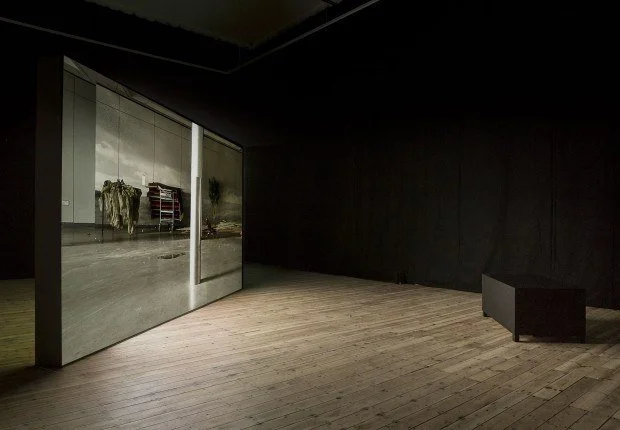
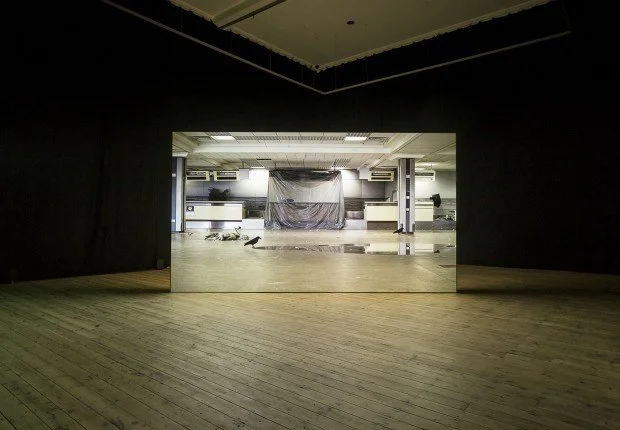
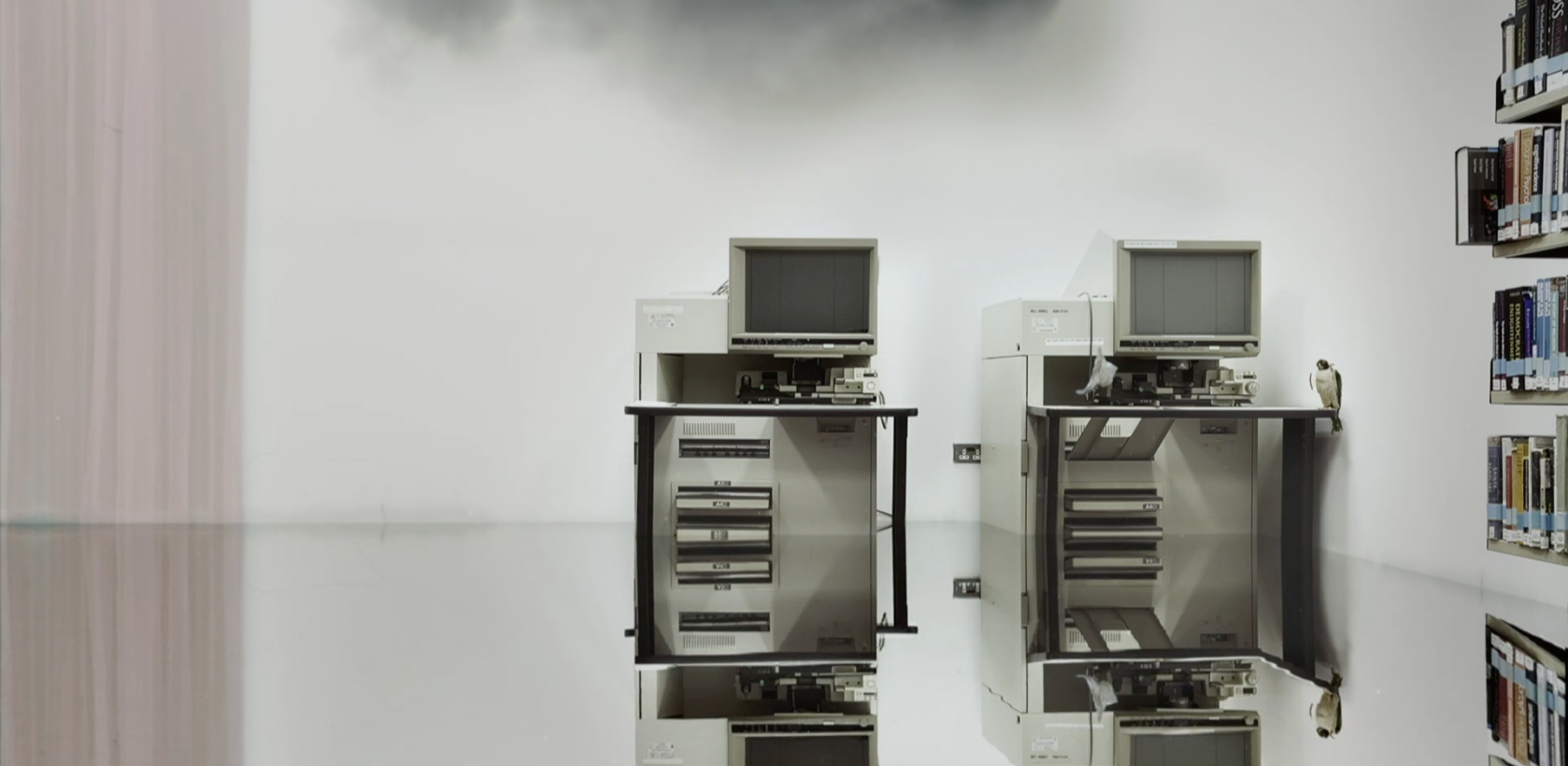
Ailbhe Ní Bhriain works with film, computer generated imagery and sound to create immersive multi–screen installations that play with ideas of representation and displacement. Her films depict archetypal or generic locations that have been transformed into a dream–like theatricality. Whether a flooded library inhabited by birds of prey or a disused airport housing a rudimentary landscape, these works represent an altered reality in which our expectations of time and place come undone.
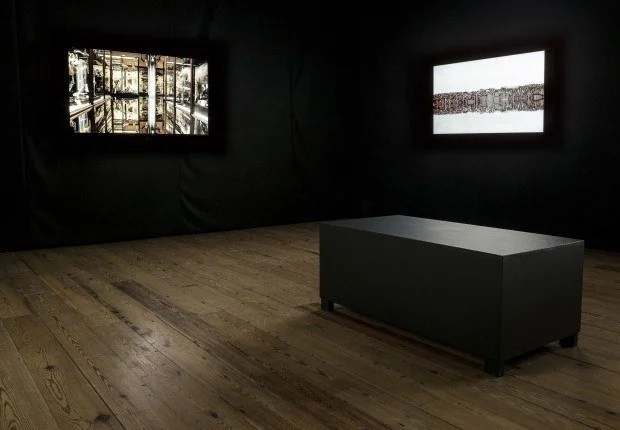
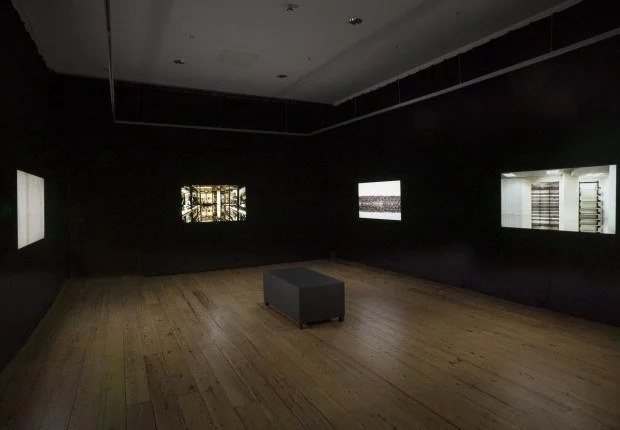
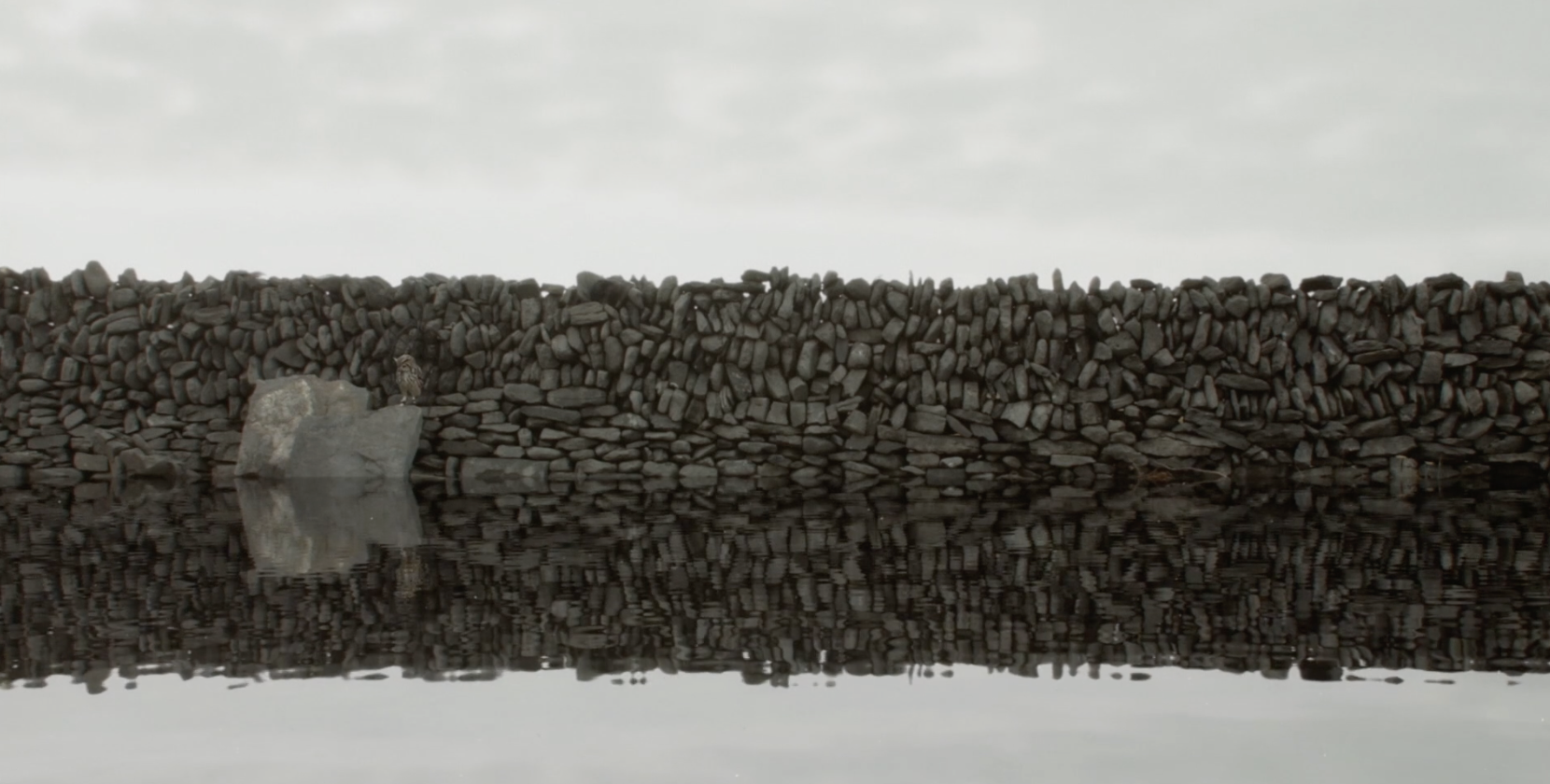
Reports to an Academy was a four screen installation that took its title from the Franz Kafka short story 'A Report to An Academy'. In the story an ape recounts his deliberate acquisition of a human identity as a means of survival in the aftermath of captivity. The work took this idea of identity as performance and explored it through multiple locations: an archetypal West of Ireland landscape, a natural history museum, an artist's studio and a library. It questioned the assumptions around authenticity and representation suggested by these locations, with each setting ultimately revealed as being equally mediated. Using film and computer–generated imagery, landscape, museum, library and studio were reimagined as stage sets in which identities might be constructed and false realities forged. The four films in the installation were looped and of varying length, creating a changing set of image combinations. A single soundtrack linked all four screens.
Window and Departure were characterised by a series of slow, continuous tracking shots through which pictorial and geographical instability gradually unfolded. The tension between stillness and movement and between real and constructed space was key to both films.
Camera motion was achieved using stop motion animation and virtual cameras within reconstructed still images, combined with CGI, 3D scanning and chroma-keyed imagery. Window and Departure conjured uncertain places, caught between interior and exterior settings. Set within abandoned architectural interiors, an unlikely ‘other’ place was suggested by projections, rudimentary props and glimpsed exteriors. It was left unstated whether these elements were imaginary ideals in the process of being constructed or the remnants of a place or vision come undone.
The work was loosely based, in terms of its thematics and the landscapes referenced, on the story of Antonin Artaud’s ill-fated 1937 trip to Ireland – a journey that began as visionary pilgrimage and retreat and ended as an episode of degradation and deportation. Of interest, the idea of what remains when the ideal collides with the real in this way, and the resonance of this to the contemporary representation of landscape.
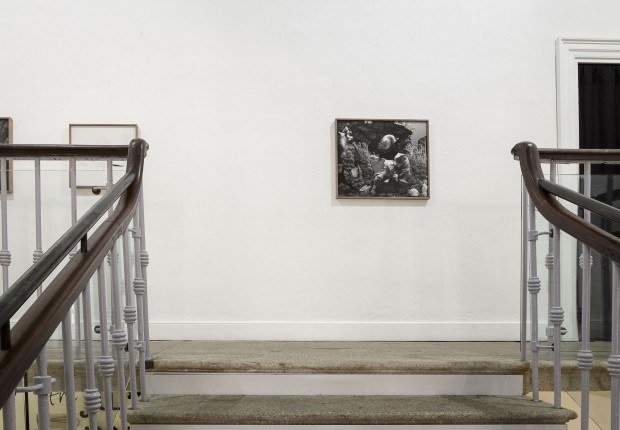
The photographic series Inscriptions continued the practice of combining imagery from disparate sources – in this case museum artefacts, expansive landscapes and studio debris. Simple collage techniques were used to collapse the binaries and conventions of the source imagery in order to imagine a series of new and permeable connections. The work took it’s starting point from a text by Samuel Quiccheberg entitled ‘Inscriptions of the Immense Theatre’. This is the earliest published text on museology and outlines the methods for the collection and categorization of objects, images and artefacts from across the world. The collection or ‘theatre’ is defined as ‘a repository of artificial and marvellous things’ and is intended to operate as a stand in for ‘the globe in its entirety’. In contrast to the presumptions and aspirations of the original text (which clearly speak of an imperialist western agenda), this series imagined a theatre of aftermath - one in which the categories and certainties espoused by Quiccheberg have broken down and where narratives must be constructed anew from the fragments of representation.
Curated by Sarah Searson
Essays and Texts; Links
Images and Video - credited to The Dock